
An out-of-the-blue message may lead to a relationship between 黑料正能量 and a Chinese institution.
In May 2018, Huang Shizhu, an assistant professor at Heilongjiang Vocation Institute of Ecological Engineering (HVIEE) in Harbin, People鈥檚 Republic of China, contacted WCC about becoming a visiting scholar. She said she wanted to 鈥渓earn the ideas and models of American community universities.鈥�
The college didn鈥檛 hear from her again for nine months. At that point, she was at the end of a six-month stay in the United States with her husband Xiaoxin Sun, who is a visiting scholar at Duke University. In China, he is an associate professor in the School of Forestry/Wetland Research Center in Northeast China in China鈥檚 Northeast Forestry University.
Shizhu had visited other North Carolina community colleges but particularly wanted to learn about WCC鈥檚 forest management technology program. Forestry Instructor Jim Moeller agreed to the meeting and Dr. Ernie White, the Applied Technologies Division dean, joined him.
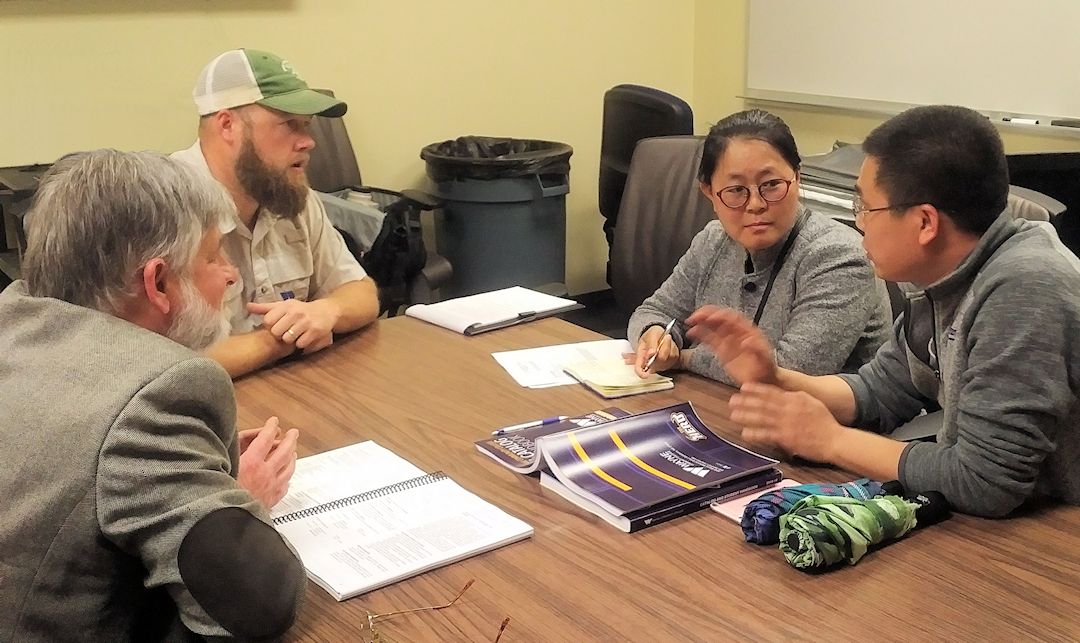
Shizhu described HVIEE as a 鈥渃omprehensive public school engaging in vocational education of forestry, garden, landscaping, horticulture, agribusiness, geomatics and聽golf course management.鈥�
She is the director of the Forest Technology program and oversees forestry and biotechnology instruction and research.
When Shizhu came to the campus, with her husband as her occasional translator, she brought a prepared list of questions that any teacher from another college might have, such as about organization of the division, program length, credits, content of courses, fees, lab locations, why WCC has summer classes (her college closes for two months in the summer), and where students go when they graduate.
鈥淚 hope to learn something from you that I can take back,鈥� Shizhu said as she came in.
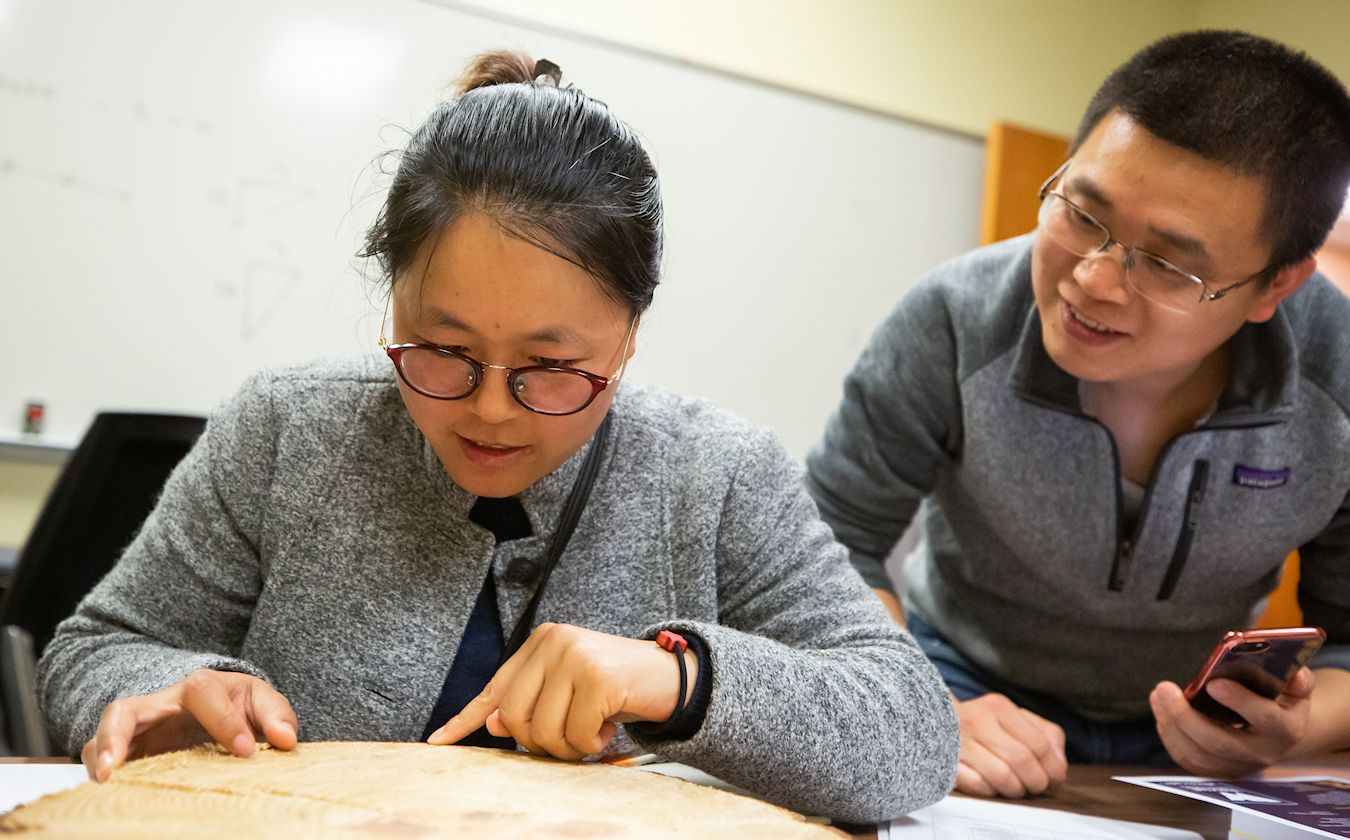
Moeller and White learned as much from her as she did from them 鈥� things like 40 percent of the land in her province is covered in forest and the trees grow very slowly there. That, she said, is why 鈥渋t is very important to have forest management, to learn technology.鈥�
While she admired WCC鈥檚 website, Moeller and White were impressed with her college鈥檚 100 acres of timber land on one of the college鈥檚 campuses, 鈥渄ivided into a variety of forest types to provide students with a broad spectrum of learning experiences.鈥�
There are similarities between the schools. HVIEE鈥檚 predecessor institution was founded around the same time as WCC. Students can earn an associate degree at both institutions and many choose to transfer to continue their educations while others opt for employment. They offer around the same number of programs and, besides forestry, both have turfgrass, accounting, business administration, operation management, early childhood education, and aviation technology.
HVIEE has around 2,000 more college-credit students than WCC and close to double the faculty but WCC鈥檚 campus, at around 156 acres with 11 instructional buildings, not counting the two buildings at the Wayne Executive Jetport, is nearly three times larger than the Chinese campus (excluding the forest).
Moeller and White shared details of WCC鈥檚 associate in applied science degree in Forest Management Technology and two five-course certificates: Natural Resource and Wildlife. They also talked about WCC鈥檚 articulation agreement with North Carolina State University鈥檚 Forestry and Environmental Resources program.
WCC is one of just four community colleges in North Carolina that offer a forestry degree. WCC鈥檚 program is the oldest of its type in the state and one of the oldest in the eastern United States.
Shizhu left with pages of notes and an abundance of WCC materials, from a catalog to class syllabi, and one special memento, a piece of yellow poplar with the WCC Forestry Program logo burned onto it.
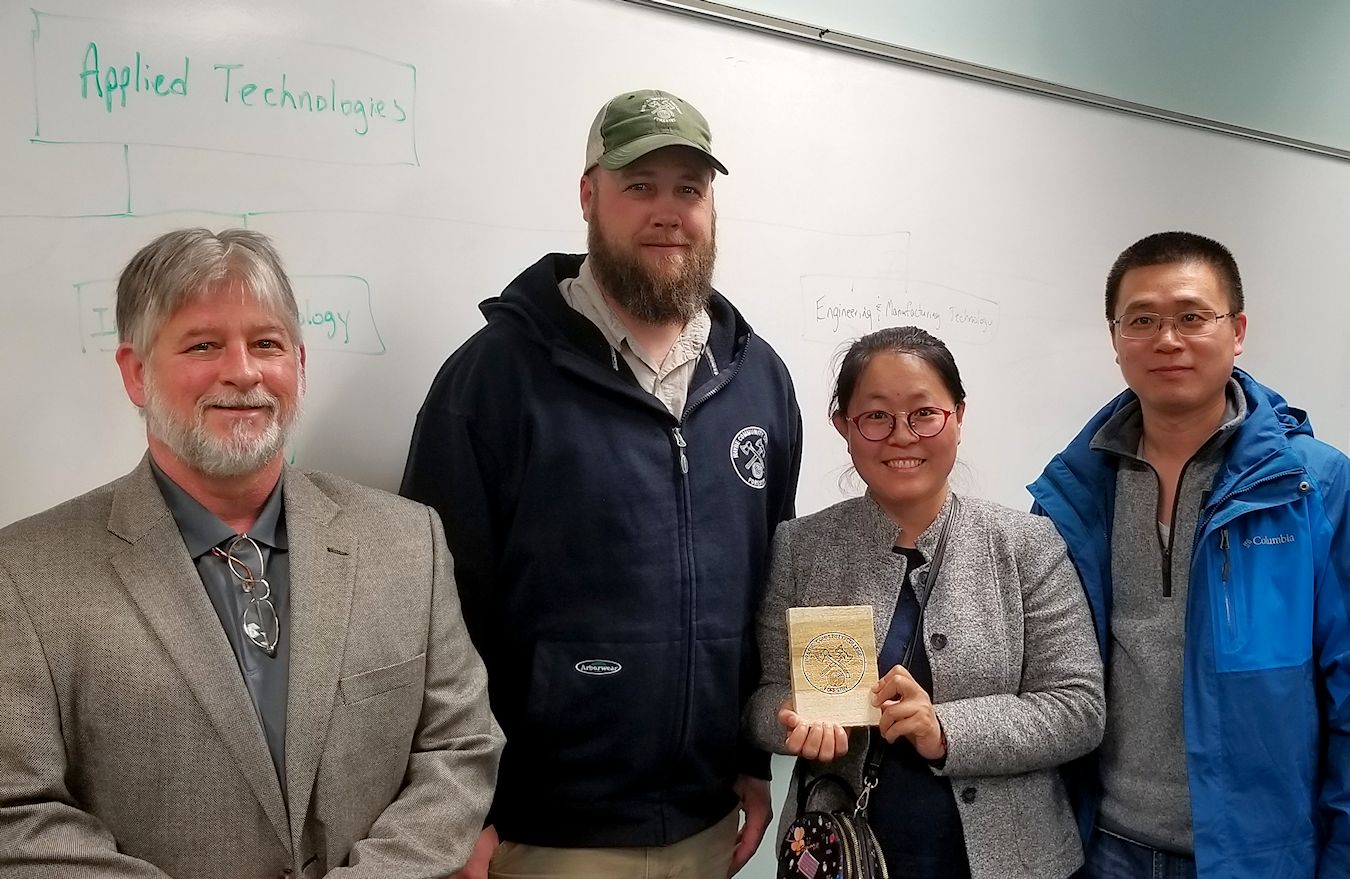
鈥淚t was a great tour for me,鈥� Huang said in a thank-you message. 鈥淚 hope to keep communicating with you and your colleagues. We hope that you will visit our college and exchange ideas with us in the future. We are looking forward to our next meeting.鈥�
鈥淪he really wants to set up a relationship between her college and WCC,鈥� Moeller said. 鈥淪he sent Dr. White some information about her president in hopes that we may invite him for a visit.鈥�
鈥淚鈥檒l admit I was skeptical of the whole thing at first but after meeting her and talking, it was a unique experience and I plan to stay in touch,鈥� said Moeller.
黑料正能量 is a public, learning-centered institution with an open-door admission policy located in Goldsboro, N.C. As it works to develop a highly skilled and competitive workforce, the college serves 12,000 individuals annually as well as businesses, industry, and community organizations with high quality, affordable, accessible learning opportunities, including more than 70 college credit programs. WCC鈥檚 mission is to meet the educational, training, and cultural needs of the communities it serves.